

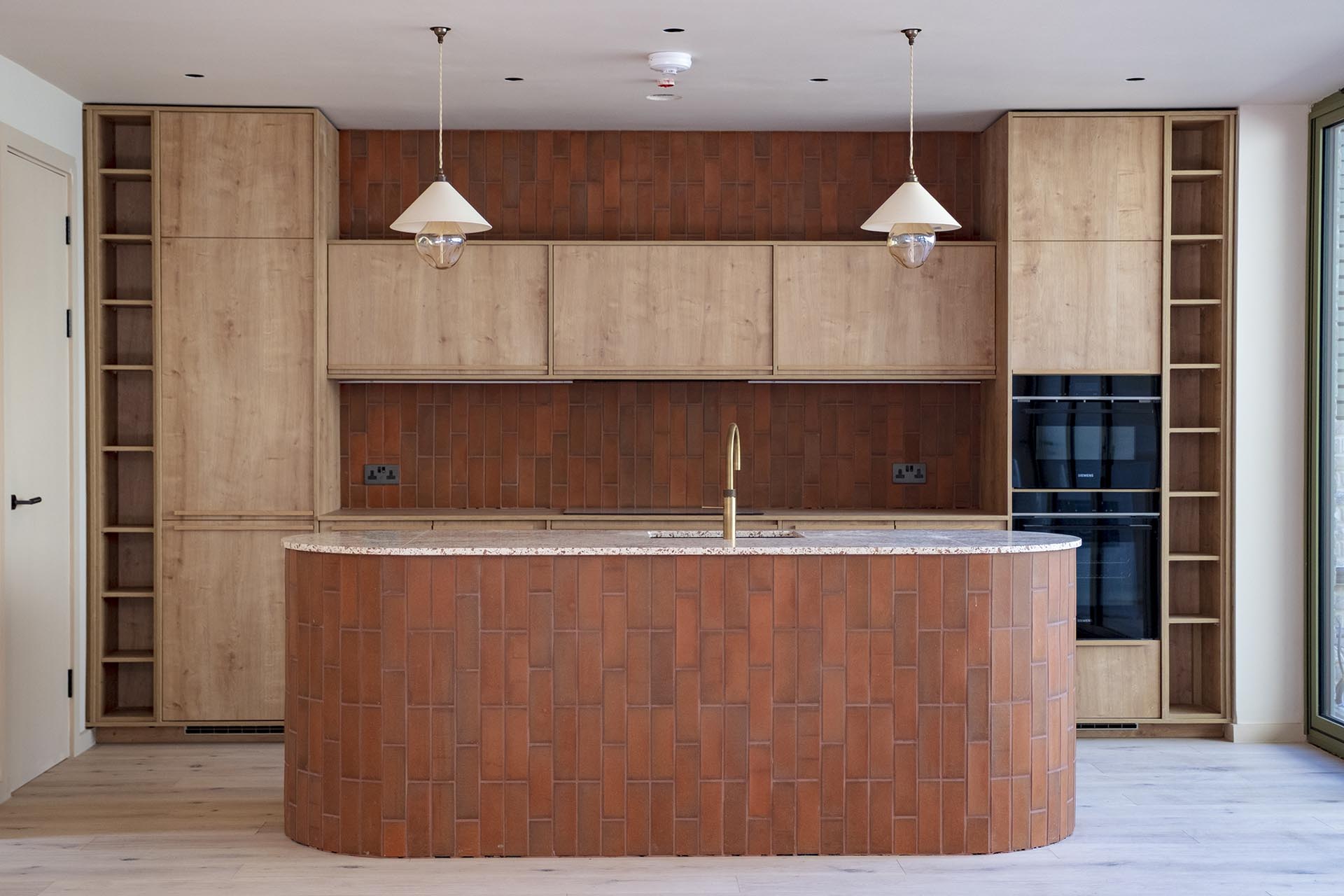
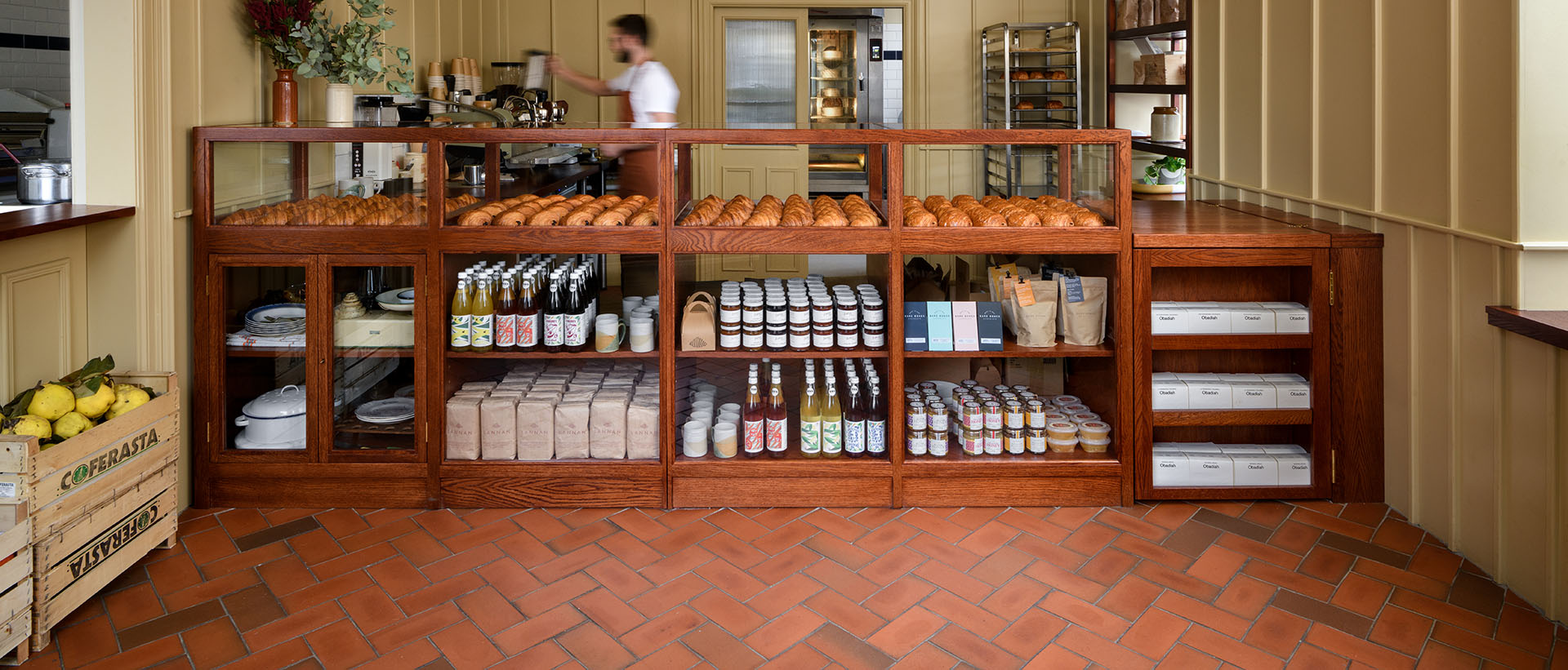
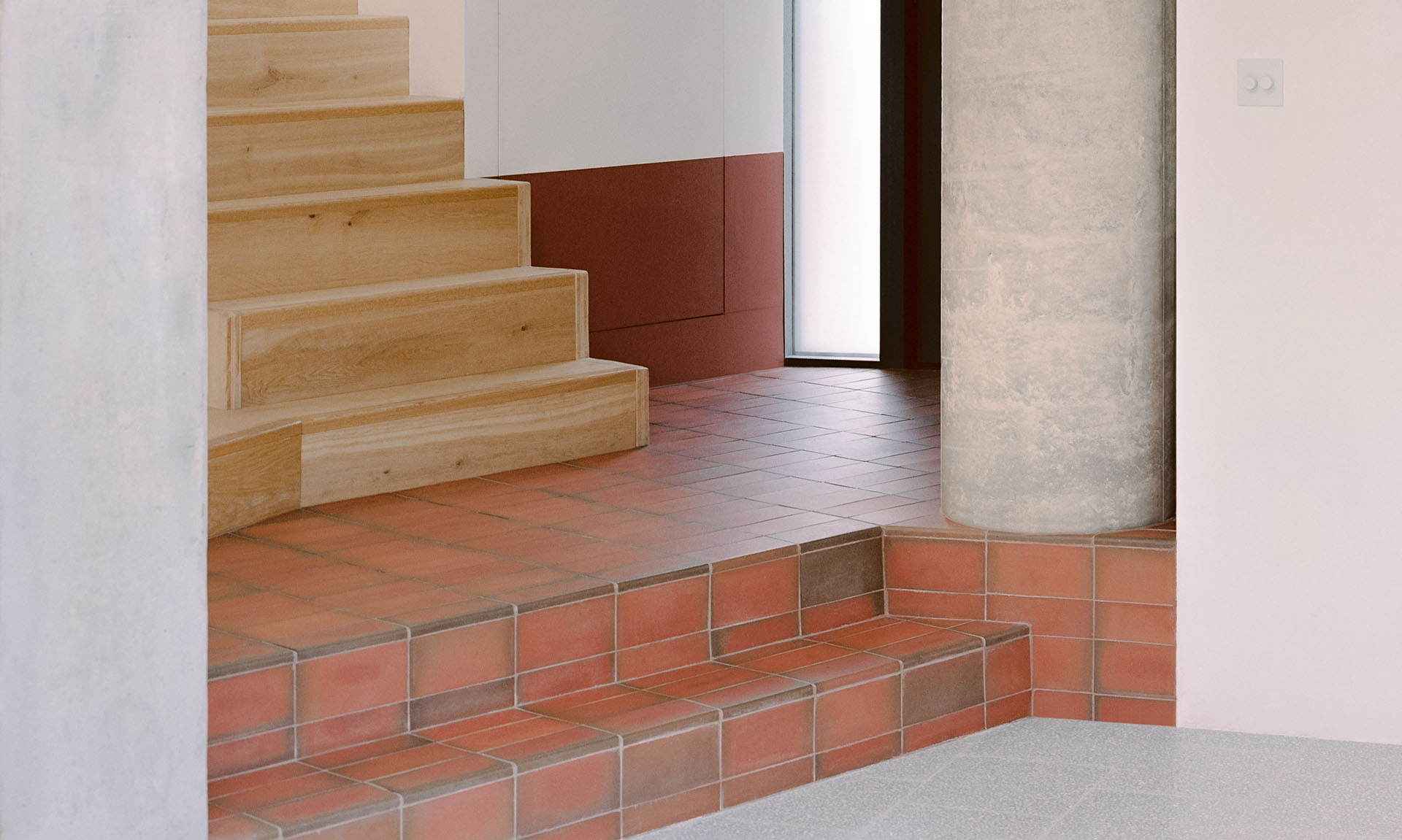
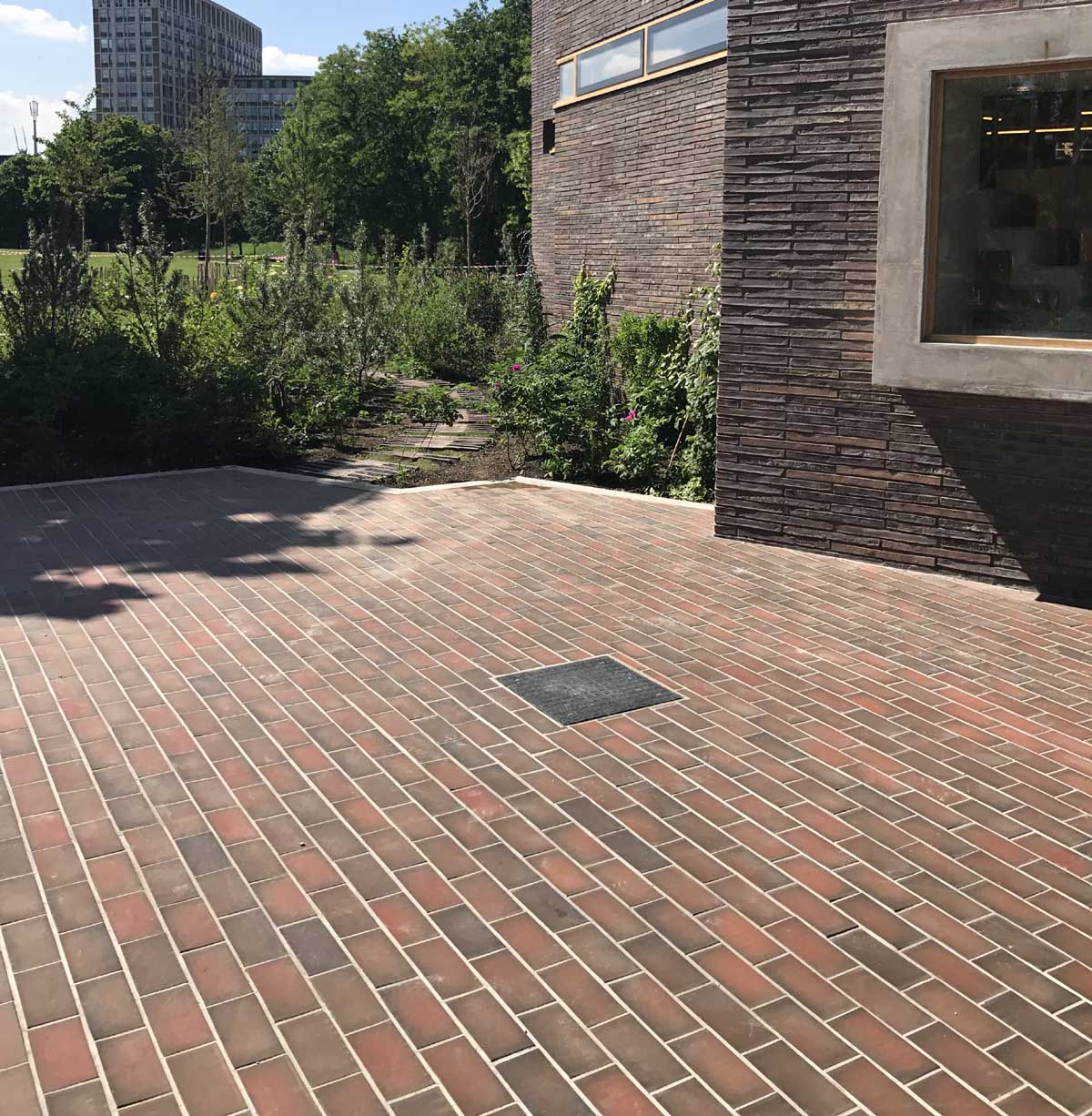
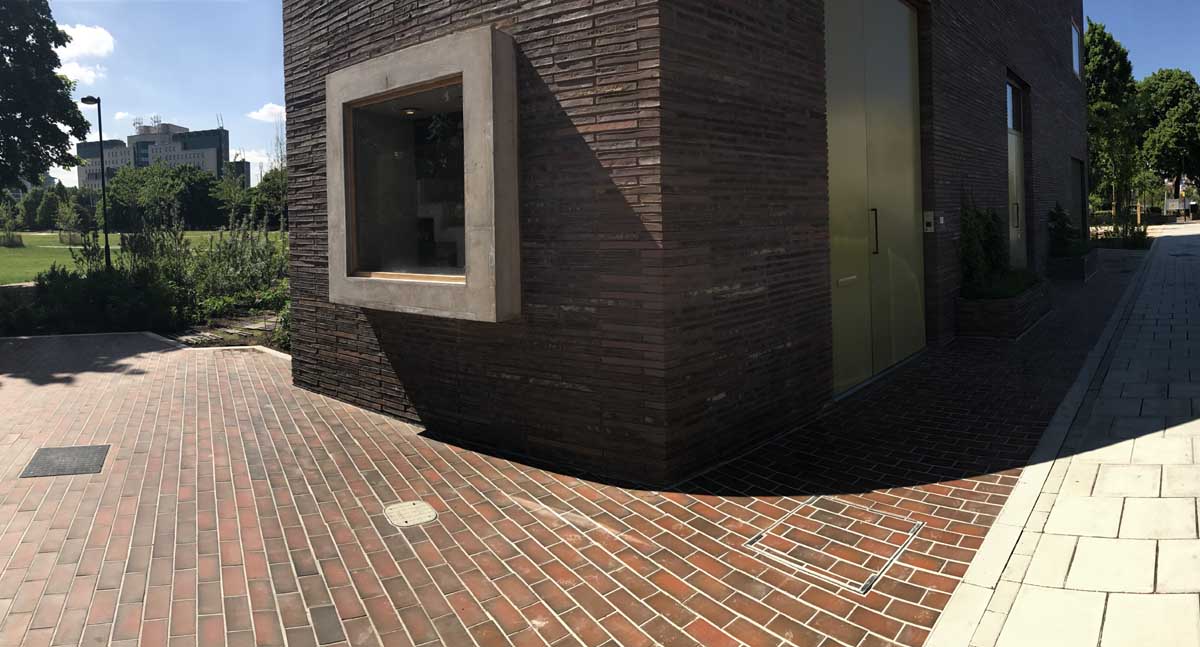
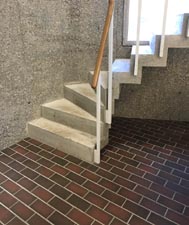
Trevor Horne Architects worked collaboratively with Charles Asprey and the gallery directors, plus a number of their artists to develop the design for this bespoke gallery space that would give a permanent home to the world renowned Cabinet Gallery. The result is a 12 sided brick building arranged over 5 floors on the site of a former pub, at the entrance to the Vauxhall Pleasure Gardens. Aaron Down at Trevor Horne Architects chose to use authentic clay quarry tiles both inside and outside the gallery as their natural colour complimented the Petersen handmade bricks used for the gallery building. After looking at samples, he selected the light multi for its variety of natural tones. The gallery has been awarded 2017 RIBA London Award. Full details
Light multi quarry tiles
Equally suited to both contemporary and heritage projects, Ketley light multi quarry tiles have rich shades of reds and brown. They work very well mixed within a palette of other natural materials.
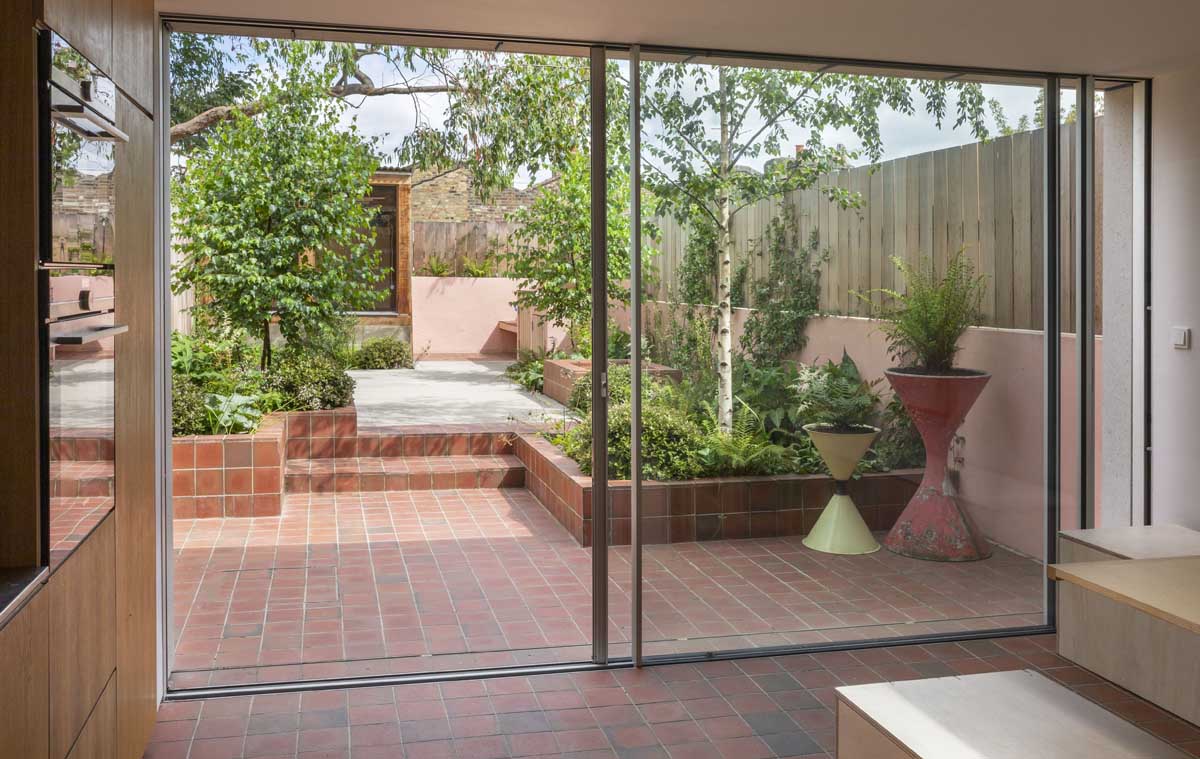
Their suitability for both exterior and interior spaces means they can give the feeling of extending the living space out on to the terrace and uniting the indoor with the outdoor.
 Frost resistant
Suitable for exterior & interior
 High slip resistance
Click here for more info
Category R11 C
Case Studies
Rugby Experience


This new interactive experience in Limerick by Niall Mclaughlin was concieved as a contemporary civic building. Bricks are a big feature of this project, with the walls being a solid construction of a 3 colour mixed blend of Michelmersh's handmade bricks. Ketley light multi quarry tiles provided the best match to the walls , giving the sense that the interior spaces are carved out of a solid brick mass. The project was a brick award winner in 2023. Full details
Jesus College Cambridge
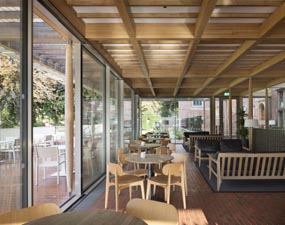
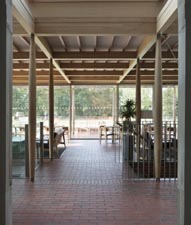
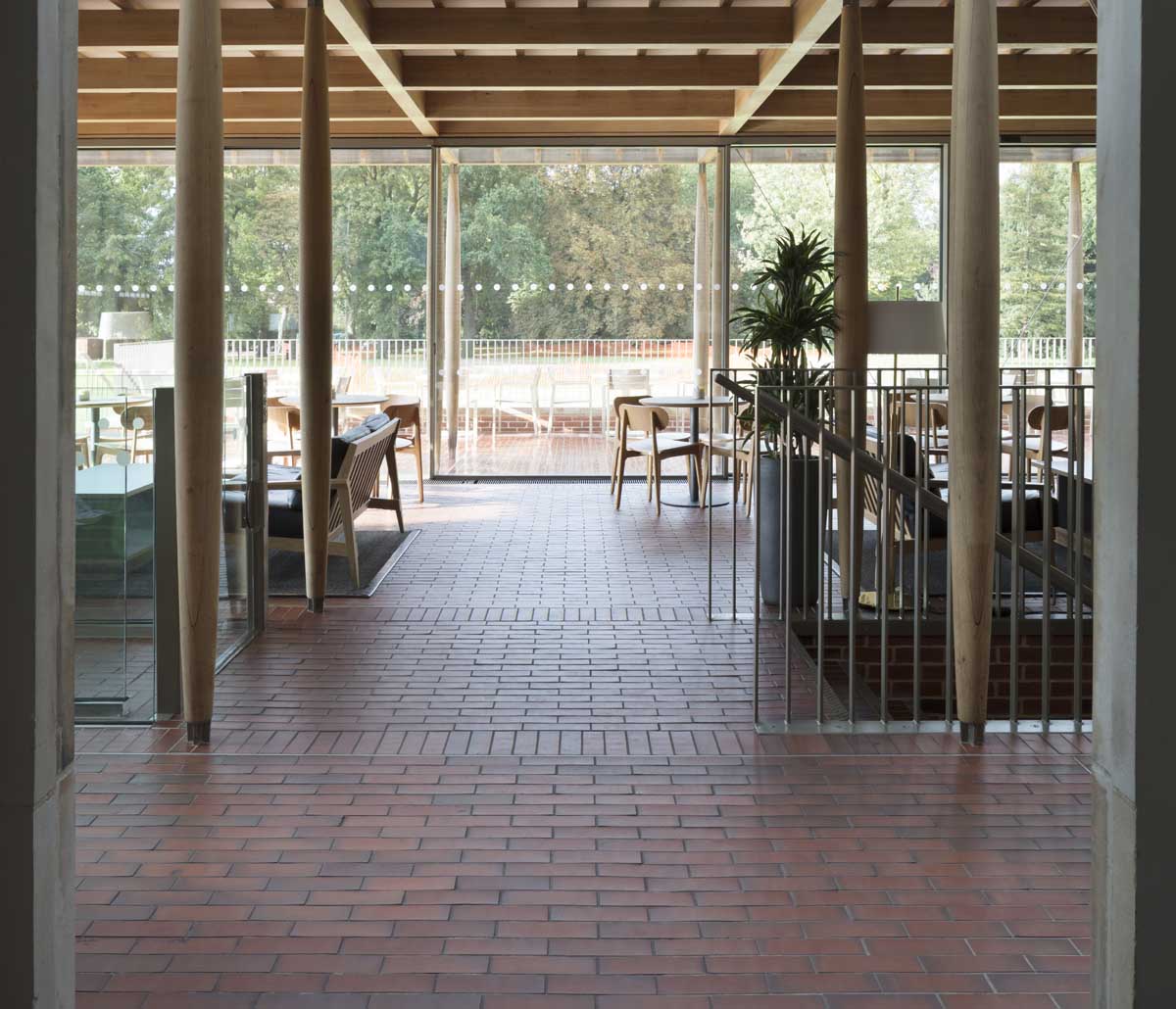
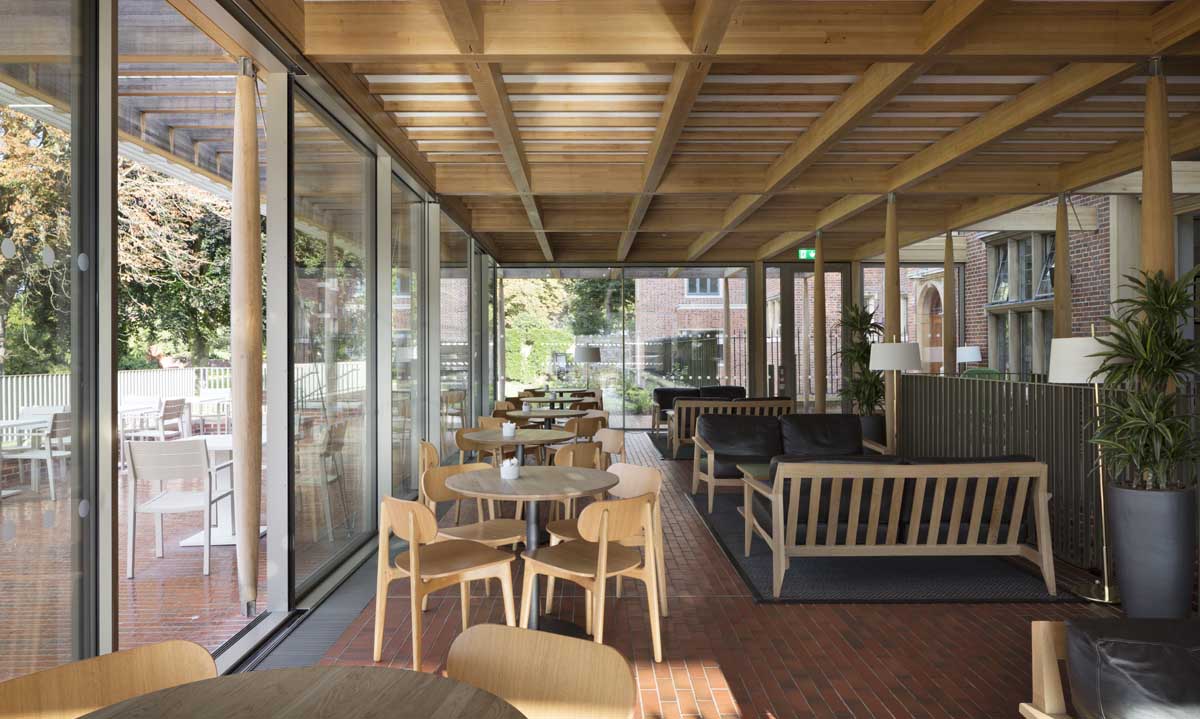
Architects Niall Mclaughlin are a practice that puts a strong emphasis on the inventive use of building materials, the qualities of light and the relationship between the building and its surroundings. At Jesus College Cambridge, the project was to refurbish and extend a Grade II listed building and staying within the historic footprint of the building was a key requirement. Oak, stone, brick and quarry tiles were chosen as a consistent pallette of materials throughout the project, unifying the refurbished elements with the new build and all perfectly suiting the historical context of the site. Light multi brick sized Ketley quarry tiles were used in the new cafeteria pavilion where they help to merge the internal and external spaces. Their natural clay tones bring a richness of colour to both the inside and outside spaces and compliment the untreated oak frames and columns. RIBA National Award winner 2018 . Full details
Cabinet Gallery Tyer St London

West London Novotel
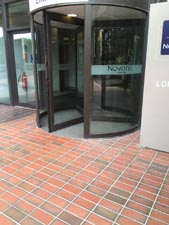
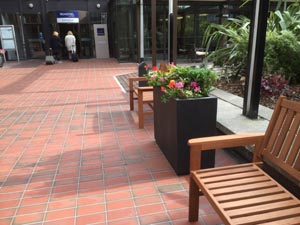
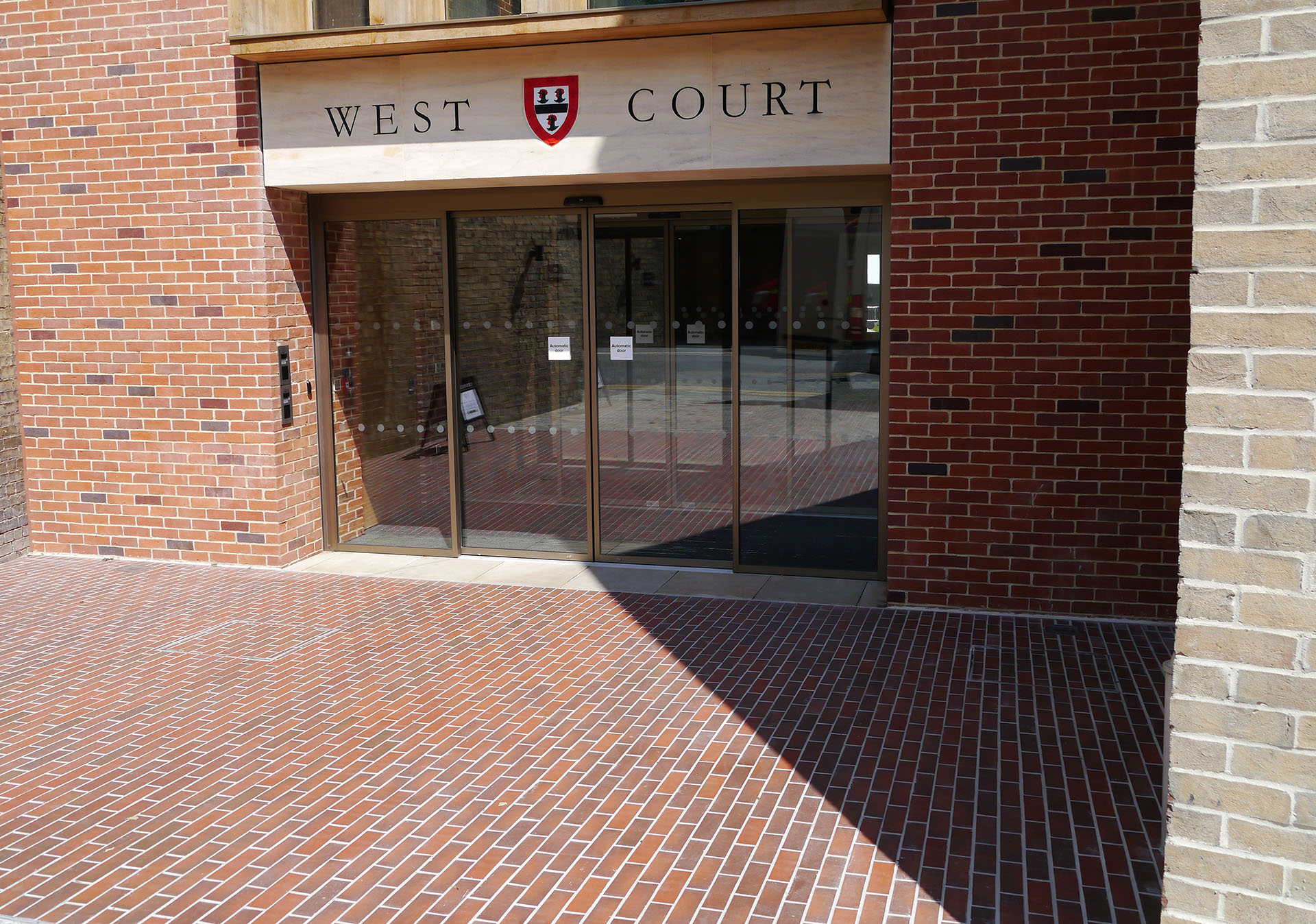
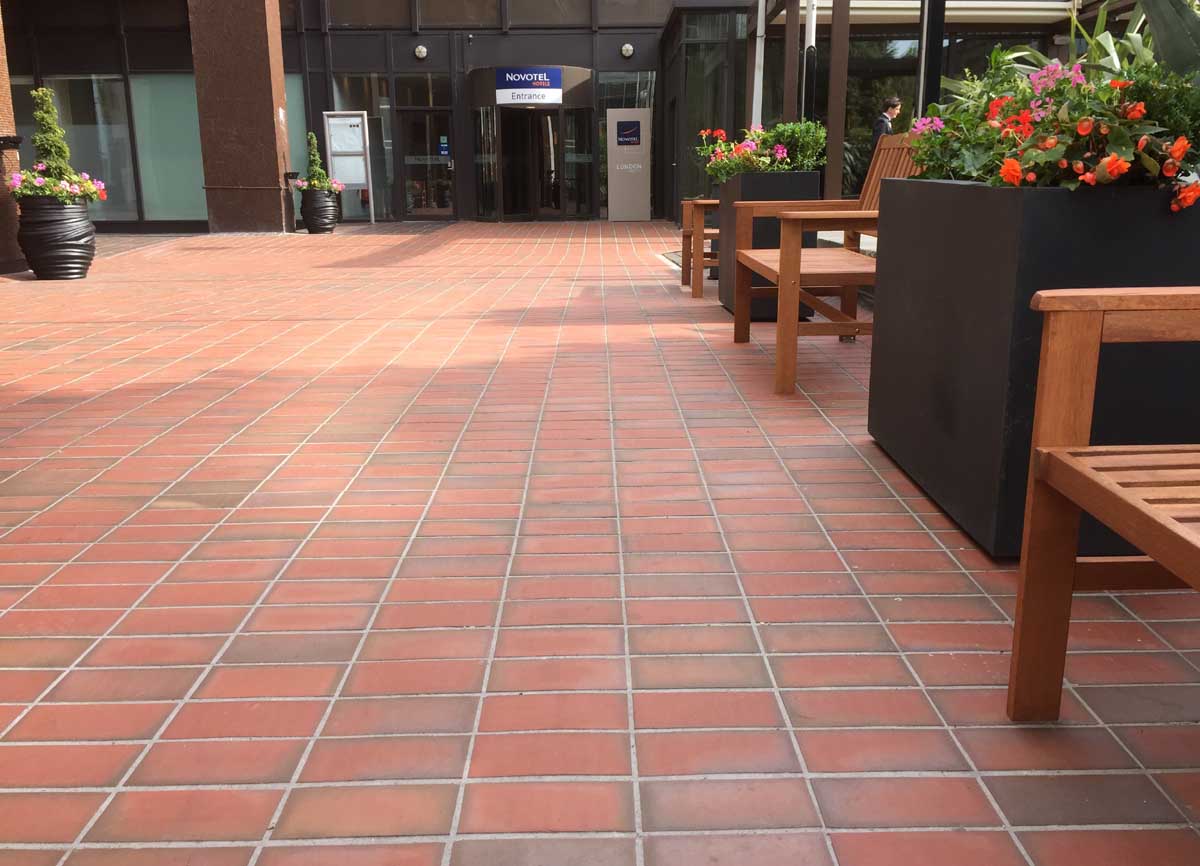
The paving outside the main reception at West London's Novotel has recently been renovated using 40,500 Ketley Light Multi quarry tiles. AT Knotts paving contractors carried out the work, using Steintec to bed them in.
Details
Ketley Quarry Tiles, sometimes known also as paving tiles or clay floor tiles, are available in a range of natural clay colours and offer similar performance to traditional quarry tiles. For restoration projects our Quarry Tiles offer a very good match to the discontinued Hawkins and Dennis Ruabon Quarry tiles which can be found in many parts of the UK. They offer excellent slip resistance and suit most flooring and wall cladding applications indoors or externally, in commercial premises or the home. They can also be used with underfloor heating systems as they are good conductors.
18mm thick, Ketley Quarry tiles are manufactured from the proven Etruria Marl clay, which becomes dense when fired, and is hard wearing and resistant to acids, alkalis, oils, grease and fats. In pendulum tests where anything higher than 36 indicates low slip potential, they score a dry value average of 63 and a wet value average of 55 meaning they have excellent slip resistance in both wet and dry conditions. They can be classified as R11 and Category C which is the highest rating for slip resistance according to BS EN 14411.
Fittings
Quarry Tile Fittings
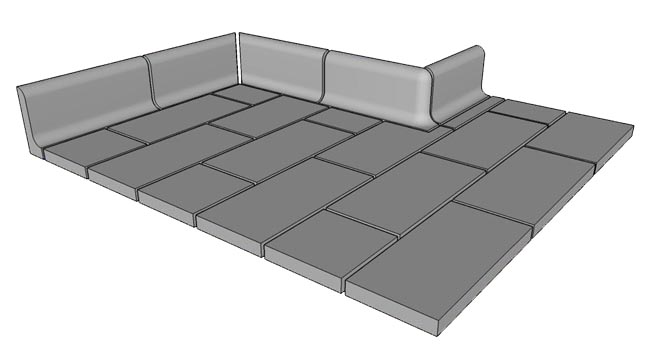
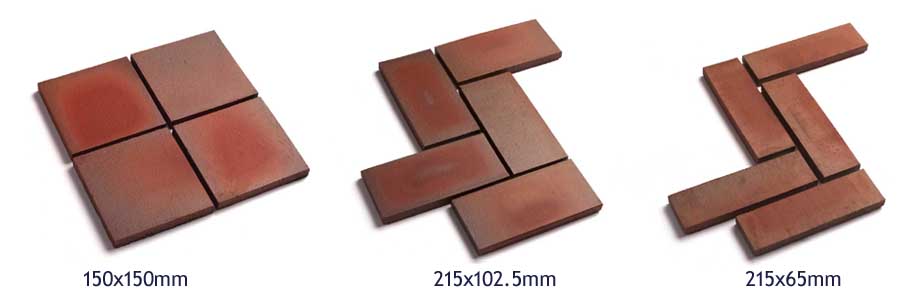
These products shown here match our rectangular quarry tiles 102mm x 215mm. Similar products are available to match our squares 100mm x 100mm and 150mm x 150mm. Please contact us for further details.
Round Edge Long - KQTREL
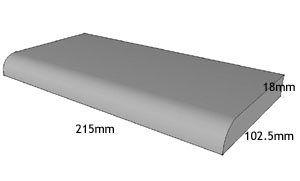
Round Edge Short - KQTRES
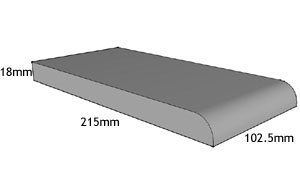
Double Round Edge - KQTREX
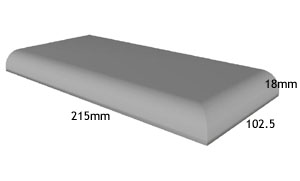
Step Tread - KQTST
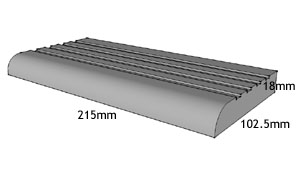
Coved Based Round Top - KQTCBRT
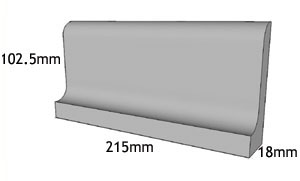
Coved Based Round Top External - KQTCBRTX
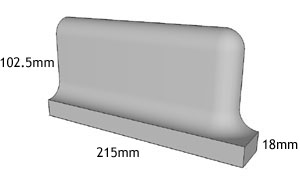
Eco
Download third party verified Environmental Product Declaration (EPD)
Place of Manufacture: Brierley Hill, UK
Environmental Management: 14001 Download Certificate
Quality Management : 9001 Download Certificate
Download the Ketley Quality and Environmental Policy
Life Cycle: BRE Global Certification in accordance with EN 15804:2012 Download Certificate
Energy: Fired in gas kilns to 1130o C
Raw materials: Etruria Marl Clay from our own quarry in Cannock, 12 miles from our factory, and sand
Lifespan: Bricks are long life building product and Ketley's bricks are the toughest and most durable bricks you can buy.
Recyclability: Mortar can be cleaned off so the bricks can be reused. They can also be crushed and used as aggregate and/or as an inert bulk fill
Packaging: We keep packaging to a minimum using wooden pallets and we do not shrink wrap our brick packs.
Find out more about Ketley's approach to sustainability
Click for the Brick Development Association infographic on Sustainability of Brick
See below the latest video about Sustainability of Brick from the Brick Development Association
Tech Spec
Ketley Quarry Tiles for flooring
Standard: BS EN 14411:2012
Ketley Quarry Tiles are manufactured from the same clay, using the same processes as the Ketley 50mm and 65mm pavers and deliver the same technical characteristics of very low water absorption, very high strength and unrivalled frost resistance.
| Quarry Tile | Joint size | Coverage per m2 |
|---|---|---|
| 215x102mm | 10mm | 40 |
| 215x102mm | 6mm | 42 |
| 215x102mm | 5mm | 43 |
| 215x65mm | 10mm | 60 |
| 150x150mm | 10mm | 40 |
Packing On pallets - 1350 pieces on a pallet for 215x102mm size pallet weight (incl pallet) 1240kg
1100 pieces on a pallet for 150x150mm size pallet weight (incl pallet) 1010kg
1890 pieces on a pallet for 215x 65mm size pallet weight (incl pallet) 1155kg
Weight per unit 215x102mm size - 0.9kg 150x150mm size - 0.9kg 215x 65mm size 0.6kg
Download Ketley Quarry Tile Specification Sheet
Download Ketley Quarry Tile Specification clause as a word document
|
Properties |
BS EN 14411 Group A1b requirement |
Typical values for Ketley Quarry tiles |
| DIMENSIONS AND SURFACE QUALITY | ||
|
length x width
215mm x 102mm 215mm x 65mm
100mm x 100mm
150mm x 150mm
|
average tolerance +/-2% to an individual maximum of +/- 4mm
|
length 215mm+/-2.5mm
width 102.5mm+/-1.5mm |
|
Thickness (18mm)
|
average tolerance +/-10%
|
+/-1mm
|
|
Straightness of sides
|
within ± 0.6%
|
0.2%
|
|
Rectangularity
|
within ±1%
|
0.2%
|
|
Surface flatness
|
centre curvature ± 1.5%
|
centre curvature +/-1.5mm
|
|
edge curvature ± 1.5%
|
edge curvature +/- 1mm
|
|
|
warpage ± 1.5%
|
warpage +/- 1.5mm
|
|
|
PHYSICAL PROPERTIES |
||
|
Breaking strength
|
Min 1100N
|
2995N
|
|
Water absorption
|
0.5 < 3%
|
1.5%
|
|
Resistance to deep abrasion
|
Max 275mm³
|
106mm³
|
|
Frost resistance
|
Value to be stated
|
No damage after 100 cycles
|
|
Slip resistance
|
Pendulum test results exceeding 36 indicate low slip potential
|
Dry value av 96
Wet value av of 58
on Slider 55 for Staffs Blue
Dry value av 63
Wet value av of 55
on Slider 96 for Brown Brindle
|
|
Inclined platform in shod conditions |
Category R11 which indicates that they are considered not to be slippery in wet or greasy conditions.
|
|
|
Inclined platform in wet barefoot conditions
|
Category C which is the highest rating for slip resistance.
|
|
|
|
|
|
|
Bond strength
|
C2 Cementatious adhesives
|
>1.0 N/mm²
|
|
Reaction resin adhesives
|
>2.0N/mm²
|
|
|
Mortar
|
0.15N/mm²
|
|
|
Moisture expansion
|
No requirement
|
Negligible
|
|
Reaction to fire
|
Value to be stated
|
A1
|
|
CHEMICAL PROPERTIES
Resistance to staining
|
Minimum requirement 3
|
Paste stain 5
Chemical/oxydising stain 4
Film stain 3
|
|
Chemical Resistance
|
|
NPD
|
Laying
Laying Quarry tiles
Download our guide to laying and cleaning Quarry Tiles
Quarry tiles should be laid on a rigid base, with no voids underneath so that the load applied to them is transferred through to the base. In situations where heavy loads are involved, the strength of the installation can be improved by the use of a thicker paver as the transverse breaking load of a clay paving product is directly related to its thickness where all other factors are equal. It is advisable to select the material to resist the most arduous conditions likely to be imposed during the life of the product.
For a sand and cement base, allow at least 3 weeks before fixing the tiles. and for concrete, at least 6 weeks, preferably 12 weeks drying time should be allowed.
The surface should be hard, sound, clean, free from laitance and dust.
It should also be flat with a tolerance of ≤3 mm under a 2m straight edge. Any deviations from this should be corrected using a levelling compound.
Under Floor Heating
Ketley Quarry Tiles are fully compatible with both water‑based (wet) and electric (dry) underfloor heating systems. Their dense, extruded clay body provides excellent thermal conductivity and heat retention, making them suitable for internal floors where UFH is installed beneath a screed or adhesive bed.
Fixing
Ketley recommends using a tile adhesive such as ARDEX X 7 R. (Download Ardex guide to fixing Ketley Quarry Tiles) This adhesive is mixed with clean water and applied to the substrate with a suitably sized notched trowel to form straight, ribbed lines. The quarry tiles are then pressed firmly into the adhesive bed at consistent joint widths (6-10mm). The backs of the tiles should be regularly checked to ensure that solid bed fixing has been achieved.
Grouting
Board should be laid over the tiled area to spread the load of the tiler when carrying out the grouting operation. The grouting mortar should be adapted for the width of the joint with a lower ratio of cement for wider joints
Ketley recommends using a flexible grout which is available in a wide range of colours from companies like ARDEX. This product is mixed with clean water to a creamy consistency and worked thoroughly into the joints using a rubber squeegee. As the work proceeds, any excess grout should be removed, residues can be removed with a damp sponge for up to 30 minutes. Any dry film can be polished off with a clean cloth afterwards. If, after this process, there is a hazy mist on the surface of the tiles, this can easily be cleaned off with a grout remover, diluted according to the maufacturer’s instructions.
Movement Joints
These should be installed in accordance with BS 5385‑3:2007. Any existing movement/structural joints should be continued through to the surface of the tiling.
Cleaning
Cleaning and Maintenance
Download our guide to laying and cleaning Quarry Tiles
CLEANING & MAINTENANCE
Ketley Quarry Tiles require minimal routine maintenance. Floors can usually be kept clean by sweeping to remove loose dirt, followed by washing with warm water and a non‑soapy, neutral, sulphate‑free detergent. Clean, dry surfaces have a naturally low slip potential; most slip incidents occur when contaminants remain on the floor, so an effective cleaning regime is essential for both appearance and safety.
ESTABLISHING AN EFFECTIVE CLEANING REGIME
- Identify contaminants so the correct cleaning agent can be selected.
- Use suitable tools, with dedicated equipment for specific areas if required.
- Schedule regular cleaning, assigning responsibility and timing around pedestrian traffic.
- Provide clear instructions on procedures, detergent use, disposal, spill response, and record‑keeping.
- Inspect floors routinely to identify wear, damage, debris, or contamination.
CLEANING METHOD
Cleaning methods vary depending on contamination, surface profile, available agents, and whether mechanical equipment can be used. Regardless of method, all residues must be removed. After cleaning, rinse thoroughly with clean water and leave the floor dry. Failure to rinse can leave detergent or contaminant residues that emulsify when re‑wetted and increase slip risk.
INITIAL CLEAN AFTER INSTALLATION
Once grout joints have hardened, tiles may require a light clean using a neutral, non‑soapy, sulphate‑free detergent, followed by rinsing. Strong detergents should be avoided as they can cause scumming. Tiles should be pre‑dampened before applying any cleaner to prevent absorption into the tile body.
REMOVING DIFFICULT STAINS
- Abrasive cleaners, avoiding steel wool, which can leave metal particles that cause rust staining.
- Chemical cleaning using an appropriate solvent; specialist advice may be required for specific stains.
- Bleaching, where suitable, to remove the colour of the stain.
NB The use of sealers and polishers on quarry tiles can make regular cleaning more difficult.